


AI-assisted prior authorization for a regional health payer
Prior authorizations were moving by fax through a legacy system that couldn't meet new CMS requirements. We built a FHIR-based layer that digitizes submissions, automates low-risk approvals, and keeps every decision auditable.
Project Description
The challenge
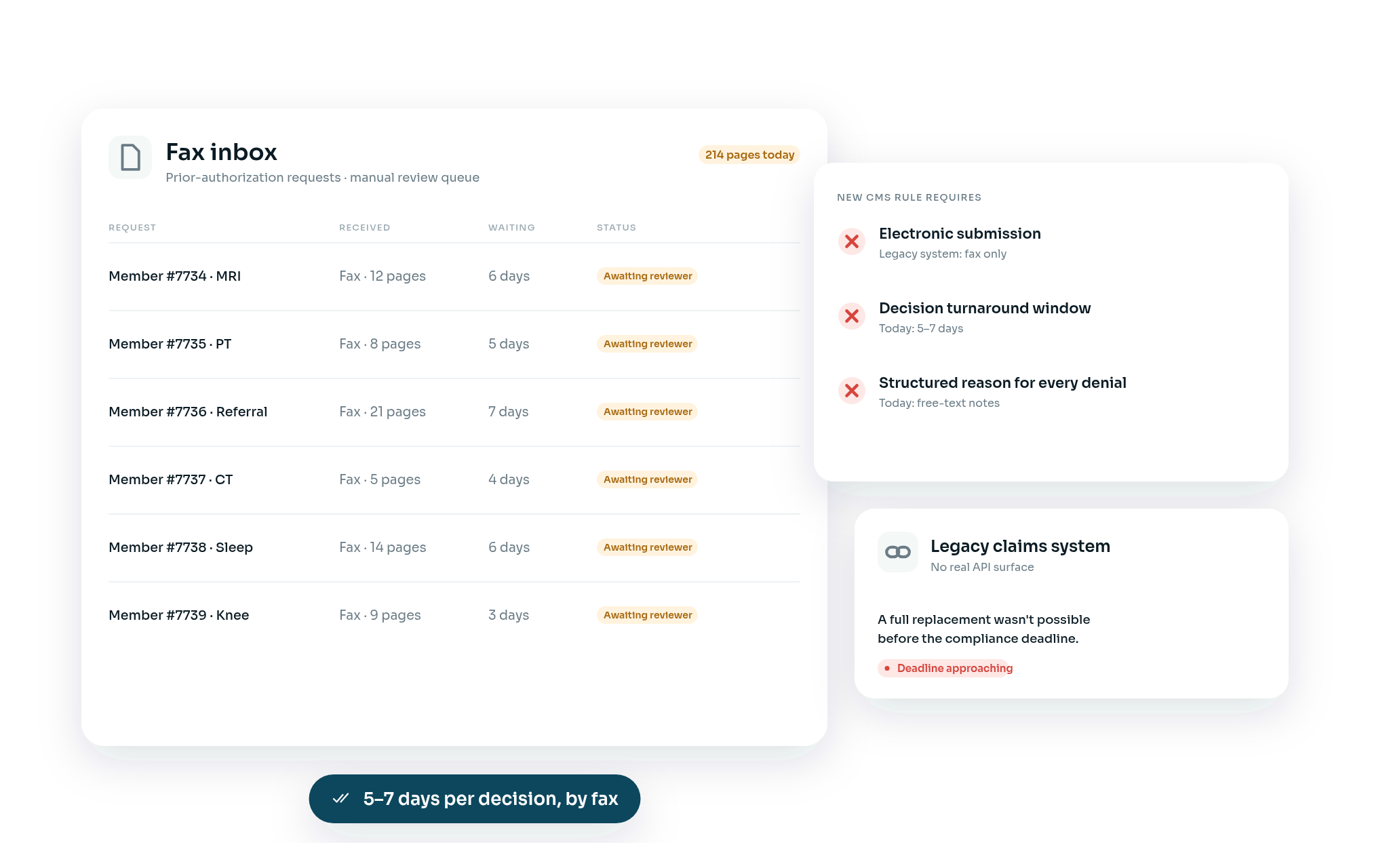
The payer's legacy claims system had no real API surface to speak of. Prior-authorization requests still moved by fax into a manual review queue, while the new CMS rule required electronic submission, a defined turnaround window for decisions, and a structured, auditable reason behind every denial. The legacy stack could produce none of that on its own.
A full core-system replacement was never realistic before the compliance deadline hit, so whatever we built had to sit alongside the legacy system rather than rip it out.
Solution
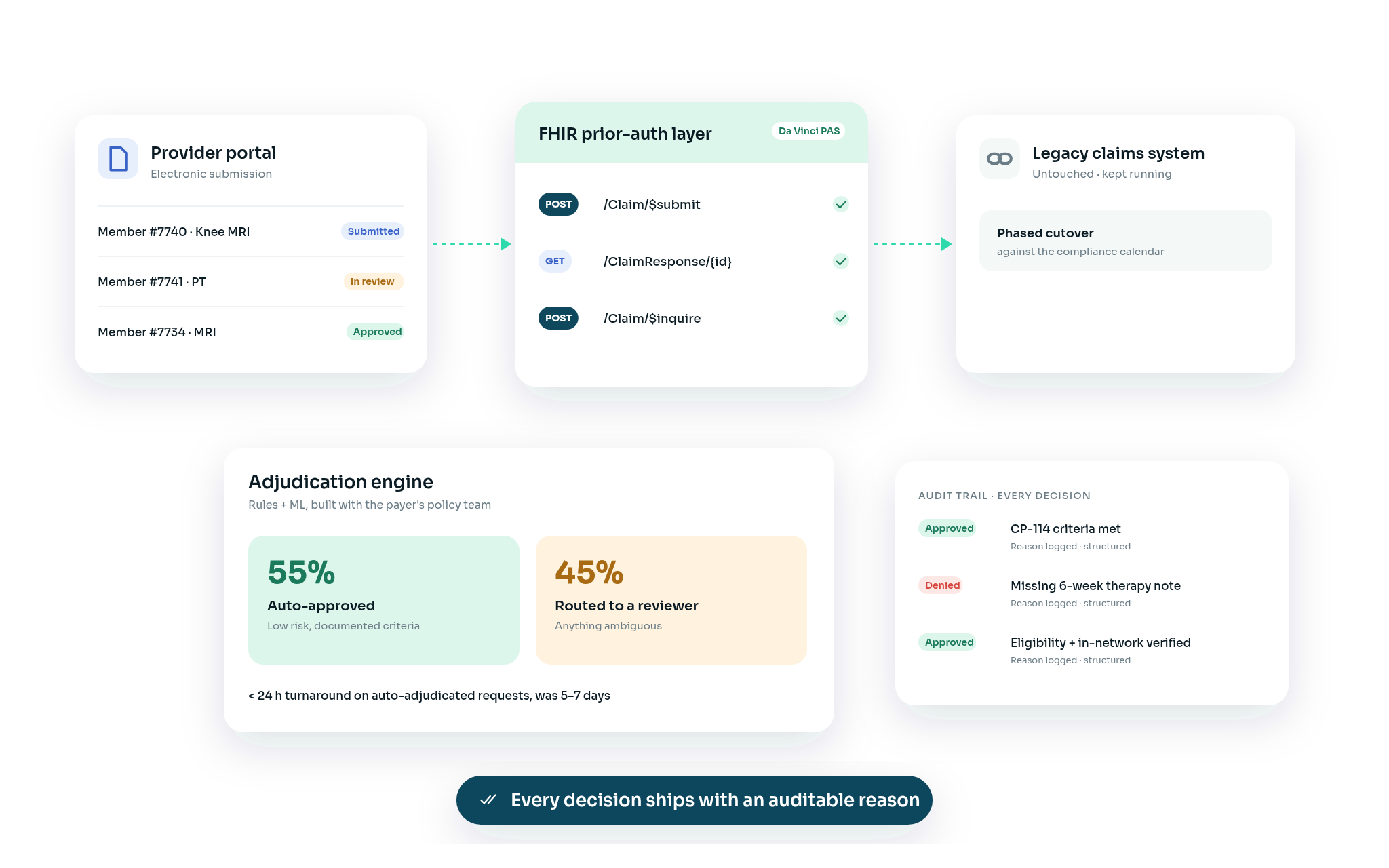
We built a FHIR-based prior-authorization layer aligned to the Da Vinci PAS implementation guide, sitting in front of the legacy system instead of inside it. A provider portal handles electronic submission and real-time status — the fax machine finally gets to retire.
A rules-and-ML adjudication engine, built together with the payer's own clinical policy team, auto-approves low-risk requests against documented criteria and routes anything ambiguous straight to a human reviewer. Every decision — approved or denied — comes out with a structured, auditable reason attached, not just a status flag.
Our approach
- Regulatory mapping - Translated the CMS final rule and Da Vinci implementation guides into a concrete technical scope and deadline plan.
- FHIR interface design - Built the PAS-compliant submission and status API as a layer in front of the legacy claims system.
- Adjudication engine, built with policy owners - Encoded clinical policy criteria into the auto-approval rules engine with the payer's own reviewers, not around them.
- Provider portal UX - Replaced the fax workflow with real-time submission and status tracking for provider office staff.
- Non-disruptive legacy integration - Shipped in phases against the compliance calendar so the legacy system kept running throughout the cutover.
Tech stack
We deliver technology-driven projects that solve real business challenges, improve efficiency, and enable digital growth.
Frontend
React.js
TypeScript
Backend
Java (Spring Boot)
PostgreSQL
Kafka
AI-layer
Python (rules engine)
Infrastructure
AWS services
Docker / Kubernetes
Integrations
HL7 FHIR (Da Vinci PAS)
Swagger / OpenAPI
The result
- Turnaround on auto-adjudicated requests fell from 5–7 days to under 24 hours.
- Around 55% of requests now get auto-approved without a human touching them, which took a real bite out of reviewer caseload on routine cases.
- The client hit compliance ahead of the CMS deadline, and the phased rollout plan had enough give in it to absorb scope changes as the rule's final guidance came into focus.
- Audit-trail reporting dropped from weeks of prep to a couple of days, since every decision already carried its reason, logged and structured, the moment it was made.