As a custom software development company, Intelisoft turns an early idea into a validated scope with a clear architecture direction, prioritized features, and measurable goals for the first release.
Custom Product Development
Tailored software development services cover the full build of a product: interface, business logic, data layer, and the integrations it needs to run in production.
Enterprise Software Development
Bespoke software development services for enterprise environments cover permission models, audit trails, reporting, and deployment options that hold up under real organizational load.
System Integration and API Development
Most products depend on systems someone else owns. We design API contracts, data mapping, retries, and monitoring so exchanges stay predictable when a service misbehaves.
Legacy Software Modernization
Old systems rarely need a full rewrite. We separate what still works from what blocks change, then modernize in steps that keep daily operations running.
Software Testing, Support and Evolution
Our custom software development services continue after release through automated testing, performance work, security updates, dependency maintenance, incident response, and a prioritized backlog of improvements.
Security must fit the way people work. We follow sensitive information from its first entry point through every user, service, and storage location. We also examine failed dependencies, lost credentials, and interrupted handoffs. Those findings shape access rules, encryption, audit trails, recovery tests, and engineering practices.
02
A delivery plan can cover applicable GDPR duties and, where payment or health data is involved, the matching industry standards.
03
Controls are written into the backlog, tested like any other requirement, and documented so an audit does not become a separate project. The final scope follows the data, jurisdictions, and actual risk.
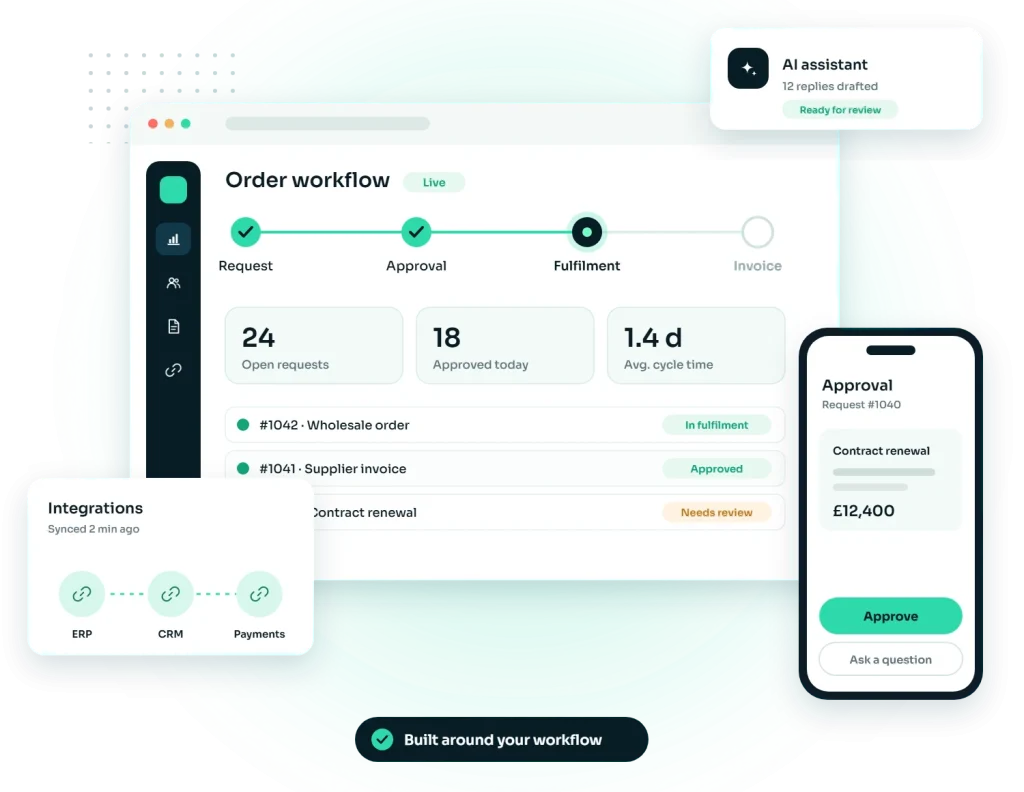
Packaged tools can work well until the team starts bending its process around them. Spreadsheets, duplicate entry, and manual handoffs soon fill the gaps. A custom software development company begins with the real workflow, then builds only the parts that remove friction or create measurable business value.
Requirements Are Still Uncertain
A complete specification helps, but many projects do not begin with one. A custom software development firm turns uncertainty into decisions through interviews, prototypes, and short discovery cycles while changes are still inexpensive.
Legacy Systems and Difficult Integrations
Older platforms rarely expose clean interfaces. A custom software development agency has to work with what exists: undocumented data, brittle exports, and strict rate limits. We isolate those dependencies behind stable services with predictable contracts.
Scaling Without Losing Control
Growth exposes whatever was postponed. A custom software development vendor should clarify ownership, scope, and delivery evidence while using modular services, caching, queues, and observability to add users, regions, and features without turning every release into a separate risk.
Our Custom Software Delivery Process
01
Discovery and Outcome Framing
Custom software development starts by defining the change the product must create and how the business will recognize it. We map workflows, data boundaries, compliance needs, integration dependencies, and delivery risks before development begins carefully and transparently.
Deliverable: validated scope and risk map.
02
Product and Solution Design
User journeys and prototypes are translated into a practical product structure supported by architecture, data contracts, integration requirements, and security controls. Scope is prioritized around business value, technical dependencies, and a realistic first production release.
Deliverable: build-ready product blueprint.
03
Iterative Engineering
Work moves in short, reviewable increments. Our custom software developers build approved priorities, connect them to real systems, and show working software regularly. Stakeholders test decisions, see trade-offs, and adjust the backlog before the next stage begins.
Deliverable: working, reviewable software.
04
Verification and Launch
Before release, the team tests the workflows people will actually use, including integrations and recovery paths. Performance, security, accessibility, and functionality need evidence. Open issues are fixed or accepted by an owner before deployment begins.
Deliverable: evidence-backed release package.
05
Deployment and Adoption
The approved solution moves into the target environment with attention to configuration, integrations, data readiness, operational procedures, and user adoption. We support the transition from development to daily use and help internal teams build stable processes around the software.
Deliverable: production-ready deployment and adoption plan.
06
Support and Evolution
After launch we monitor system behavior, resolve issues, strengthen performance, and evaluate opportunities for further improvement. Product decisions are informed by real usage, operational feedback, changing requirements, and business priorities as the company keeps moving.
Deliverable: support baseline and prioritized product roadmap.
Our clients
Generated over
$50M
in additional revenue for our clients
72%
Faster development processing with AI
98%
Customer satisfaction and strategical success
Client Testimonials
How Much Does Custom Software Development Cost?
Choose a reference scenario to see what a typical first release can include. Final scope, integrations, security, and operational requirements determine the estimate.
The mix depends on the product’s current stage. The project scope may cover discovery, product design, architecture, web or mobile engineering, integrations, testing, deployment, and support. Some clients need the complete route. Others bring a custom software development company into one difficult stage. We define that boundary first for everyone involved in delivery today.
We start with the process, not a preference for building. If a licensed product covers the important work and the remaining gaps are minor, buying is usually faster. Custom code makes sense when the workflow differentiates the business, integrations are unusual, or licence costs rise faster than value. Often the practical answer combines both approaches. We document the choice before delivery moves forward.
Usually yes. We start with the code, architecture, infrastructure, data, and integrations to see what still earns its place. The result may be a new interface, stronger APIs, a cloud migration, modular replacement of specific components, or targeted performance work. A full rewrite is proposed only when the existing base makes every change expensive.
First we inventory the data: what exists, why the product needs it, where it travels, and who can see it. That picture determines access controls, encryption, logs, retention, backups, and the scrutiny given to outside services. Every safeguard becomes something the team can test. We record the reasoning as well, so ownership remains clear after handover. The client can review every decision clearly after handover.
A focused first release often takes three to six months. Difficult integrations, data migration, or regulatory work can stretch delivery across several phases, so the number is useful only with its assumptions. Discovery turns those assumptions into milestones, dependencies, and decision points. When important facts change, the schedule changes openly too for everyone.
A price without a scope says very little. Data migration, integrations, assurance, and operating constraints can make two similar products require completely different effort. Any custom software development firm should unpack its estimate for the client: the assumptions, excluded work, and decisions that could move the total. The approved price will be added by the client later.
Launch changes the work; it does not end it. Support may cover monitoring, incidents, defects, security updates, performance, cloud costs, and changing integrations, alongside planned improvements. Before handover we agree who owns each environment, how escalations work, and which measures matter. A custom software development partner keeps routine work from turning into emergencies.