Telehealth software development services turn a care model into a product patients can navigate and teams can operate, with a focused first release built around the highest-value workflows.
Patient Telehealth Applications
A telehealth software development company should make virtual care easier from booking through follow-up. Intelisoft connects intake, consent, waiting, consultation, payment, and next steps across web and mobile.
Clinician Virtual Care Workspace
Our telehealth development services give clinicians the context and tools to review patients, document visits, communicate, place orders, and plan follow-up without repeating routine work in disconnected systems.
Remote Monitoring Workflows
As a telehealth development company, we turn patient data into prioritized work. In our RPM project, care coordinators cut daily triage time by roughly 40%, while 30-day readmissions fell 34%.
Telemedicine Integrations
A telemedicine development company should make EHR, identity, payment, messaging, prescribing, laboratory, and device connections feel like one service, with failures visible to the teams responsible for resolving them.
Modernization and Support
Our telemedicine development services improve live platforms without disrupting active care, addressing the UX, integration, performance, cloud, security, and monitoring issues that limit adoption or growth.
Telemedicine Software Development Services and Solutions
A telemedicine software development company must protect identity, communication, health data, recordings where used, and connections to third parties. We plan permissions, encryption, auditability, secure storage, monitoring, recovery, and support around actual data flows.
02
As a telemedicine development company, we can account for applicable HIPAA safeguards in the US and relevant FDA considerations when intended use creates medical-device obligations. Scope depends on product behavior, users, deployment, and clinical risk.
03
Our telemedicine development services can also account for UK GDPR and relevant MHRA guidance where applicable. Security and compliance decisions remain tied to the target market, care model, data handling, vendors, and documented responsibilities.
Our custom telemedicine software development services connect booking, intake, consent, consultation, payment, and follow-up, giving patients one understandable journey and reducing coordination work for staff.
Fragmented Clinical Context
Give clinicians the right context before the call begins. We bring records, forms, device data, notes, and next steps into the visit workflow, reducing time spent searching or copying information.
Operational Complexity
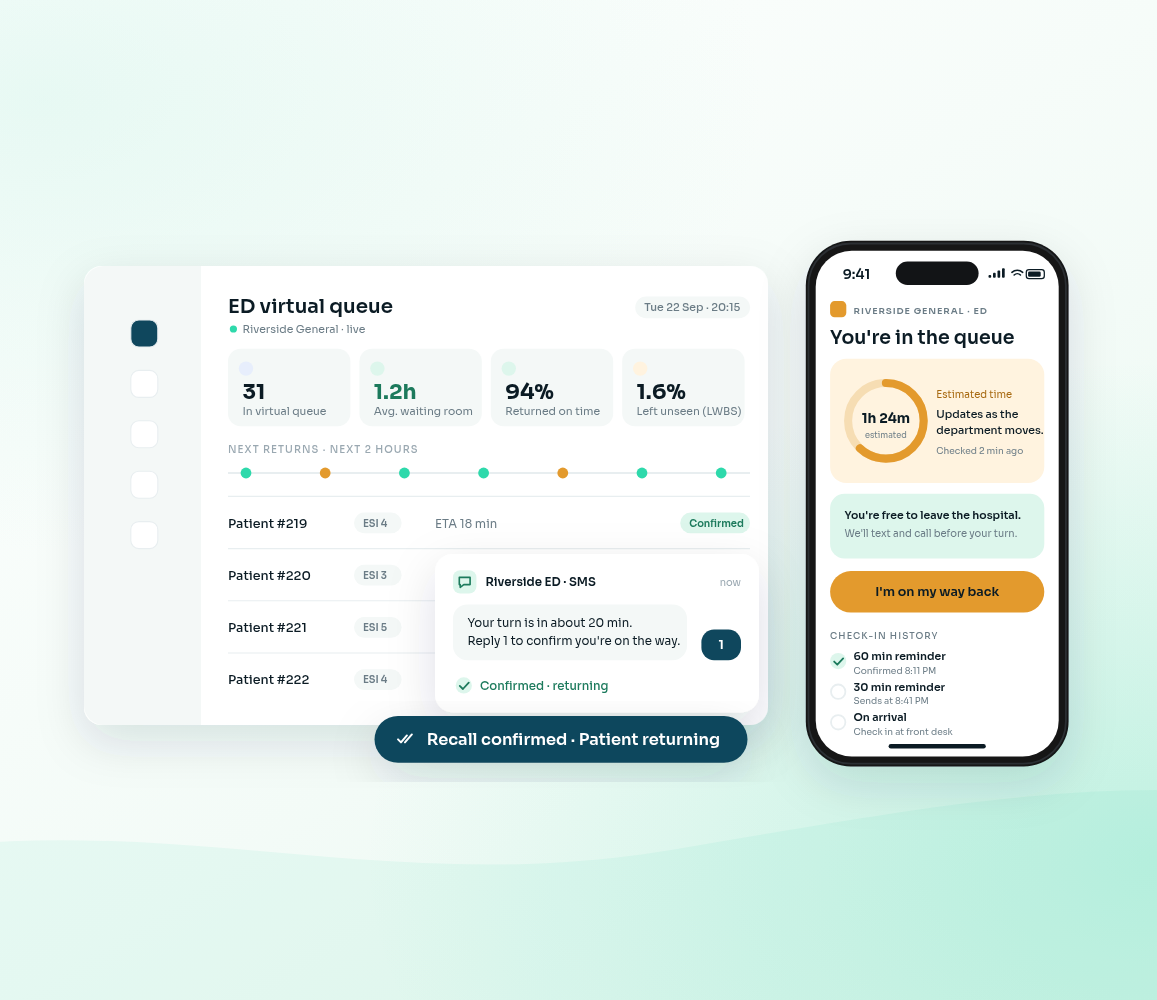
Control the operational complexity behind virtual care. Clear availability, routing, queue, no-show, time-zone, and escalation rules help staff resolve exceptions without hidden spreadsheets or manual workarounds.
Quality Across Devices and Networks
Keep visits usable when bandwidth, browsers, or devices vary. We design recovery and fallback paths, test accessibility and performance, and make connection problems understandable to patients and staff.
Our Process for Telemedicine Software Development Services
01
Care Model Discovery
Our telehealth software development services begin by mapping services, users, jurisdictions, workflows, data, integrations, and measures of success. This keeps product scope connected to how care will operate.
Deliverable: validated care model and scope.
02
Experience and Solution Design
We design patient, clinician, and administrator journeys alongside architecture, data contracts, integration requirements, security controls, and a prioritized first release. Prototypes make high-risk workflows and open product decisions visible before full implementation.
Deliverable: build-ready product blueprint.
03
Iterative Engineering
A cross-functional team delivers tested increments across interfaces, backend services, integrations, and virtual-care capabilities. Regular demonstrations help stakeholders validate behavior, review quality evidence, and resolve open decisions early.
Deliverable: working, reviewable platform.
04
Verification and Readiness
We test core workflows, supported devices and browsers, connectivity behavior, integrations, security, accessibility, performance, recovery, and operational scenarios before a controlled launch. The team also confirms ownership of support and escalation paths.
Deliverable: evidence-backed release package.
05
Launch and Adoption
The platform is deployed with configuration, integration, data, support, and user-readiness work coordinated around the target service. Responsibilities and escalation paths are clear before real visits begin, and the release is monitored against agreed readiness measures.
Deliverable: production launch and adoption plan.
06
Support and Evolution
After launch, we monitor service behavior, resolve issues, tune performance, and plan improvements using product usage, care-team feedback, patient needs, operational priorities, and recurring support patterns.
Deliverable: support baseline and prioritized roadmap.
Our clients
Generated over
$50M
in additional revenue for our Healthcare clients
72%
Faster development processing with AI
98%
Customer satisfaction and strategical success
Client Testimonials
How Much Does Telemedicine Software Development Cost?
The estimate depends on care workflows, patient and clinician applications, video approach, integrations, payments, remote monitoring, security, and target markets. Compare two common starting scopes below.
Work can include care-model discovery, product design, patient and clinician applications, video and messaging, scheduling, intake, consent, payments, EHR integration, remote monitoring, testing, deployment, and support. The exact scope follows the service you plan to deliver and the systems it must connect with.
Yes. A usable product also needs identity, provider availability, booking, forms, consent, a virtual waiting experience, clinical context, documentation, payments, follow-up, administration, and support. Video is one capability inside a broader patient and care-team workflow. The platform must also handle connection problems, no-shows, handoffs, and the work that continues after the consultation ends.
Yes. For a telehealth product, the main questions are what the clinician needs to see before the visit, what must return to the record afterward, and how quickly. Typical flows include appointments, patient details, visit notes, orders, and prescriptions. We agree on each flow with the clinical team, then build and test it against the interface the EHR actually provides, such as FHIR, HL7 v2, or a vendor API.
Yes. Remote care can include device and patient-reported data, enrollment, thresholds, review queues, alerts, escalation, trends, and patient tasks. We define who reviews information, what requires action, and how the workflow connects with the clinical record and existing operating model. The design also covers missing readings, false alerts, device issues, and clear patient guidance.
We map identity, roles, data flows, vendors, storage, and operational responsibilities. Those findings shape permissions, encryption, audit records, secure development, monitoring, backup, recovery, and incident processes. Applicable compliance requirements are scoped to the product’s target market, intended use, and risk.
A virtual consultation product with booking, video, and basic visit documentation may take several months for its first release. Remote monitoring, separate patient and clinician apps, EHR integration, or launch in more than one market add further stages. After discovery, you receive a plan with milestones and the assumptions behind each one.
A telemedicine software development company should understand both the product and the operating care model. Intelisoft brings product, design, engineering, QA, DevOps, and integration work into one full-cycle team, with AI applied only where it supports a defined outcome.